
Diploma in Electrical and Electronic Engineering
Diploma in Electrical and Electronic Engineering
(Part Time)
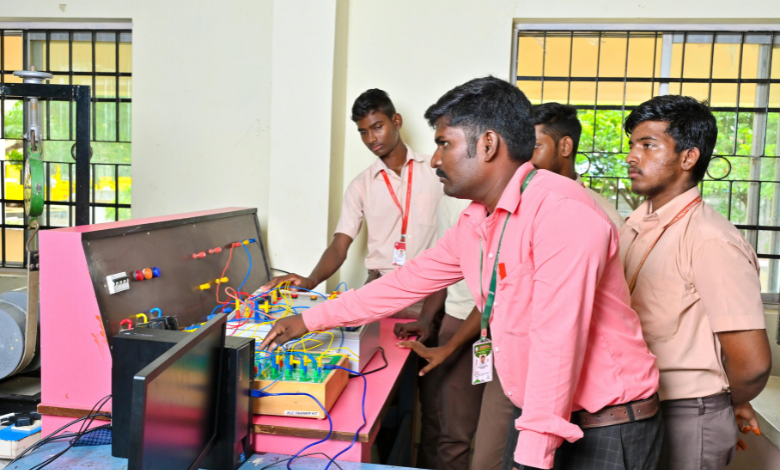
Diploma in Electrical & Electronics Engineering (Part-Time)
Muruga Polytechnic College, established in 1998 and affiliated with the Directorate of Technical Education (DOTE), Tamil Nadu, offers a Diploma in Electrical & Electronics Engineering (Part-Time) a 4-year part-time program that allows students to earn a recognised Diploma in Electrical & Electronics Engineering while managing other commitments.
This program is open to:
• 4 Years (Part-Time) – for students who have completed 10th Standard (SSLC/Matriculation)
At Muruga Polytechnic College, Kallakurichi, our experienced faculty, structured part-time schedule, and strong industry connections ensure that every student receives quality education that fits their schedule.
With over two decades of excellence in technical education, Muruga Polytechnic College continues to be the preferred choice for Diploma in Electrical & Electronics Engineering (Part-Time) among students across Kallakurichi, Villupuram, and the surrounding districts of Tamil Nadu.
Why Choose This Program?
- DOTE-Affiliated & Government-Approved qualification recognised across Tamil Nadu and India
- Flexible Part-Time Schedule — structured to allow students to manage study alongside other commitments
- Same Curriculum, Same Credential as the full-time Diploma in Electrical & Electronics Engineering
- Experienced Faculty with industry and academic expertise
- Strong Industry Connections supporting career advancement and placement assistance
- Proven Track Record of graduates employed in leading electrical and electronics engineering companies
Core Subjects
- Mathematics for Electrical Engineers
- Basic Electronics
- Electrical Circuit Analysis
- Electromagnetic Theory
- Digital Electronics
- Power Systems
- Control Systems
- Electrical Machines
- Microprocessors
- Communication Systems
Laboratory Work
- Electrical Machines Lab
- Electronics Lab
- Digital Electronics Lab
- Microprocessor & Microcontroller Lab
- Power Electronics Lab
- Measurements & Instrumentation Lab
Project Work
In the final semester, students undertake a structured project that connects their engineering knowledge with real-world electrical and electronics challenges. Projects have covered areas such as power system design, automation circuits, and microcontroller-based systems — all guided and evaluated by experienced faculty.
Industrial Training
As part of the curriculum, students complete an industrial training component. This places students in power plants, manufacturing units, electrical firms, and electronics companies across Tamil Nadu, giving them direct exposure to real-world engineering environments.
Elective Subjects
Students may choose elective subjects based on their area of work or career interest, including:
- Renewable Energy Systems
- Embedded Systems
- PLC & SCADA
- Electric Vehicles & Drives
These electives are designed to align with current industry demands and help students specialise in high-growth engineering domains.
Career Opportunities After Diploma in Electrical & Electronics Engineering (Part-Time)
- Senior Electrical Engineer – Move into design, development, and technical leadership roles
- Power Systems Engineer – Advance in power generation, transmission, and distribution
- Automation Engineer – Design and maintain automated systems in manufacturing plants
- Instrumentation Technician – Take on formal responsibilities for measuring and control instruments
- PLC & SCADA Technician – Programme and maintain industrial control systems
- Solar & Renewable Energy Technician – Install and maintain solar panels and renewable energy systems
- Maintenance Manager – Oversee electrical and electronic systems and maintenance teams
- Entrepreneur – Launch your own electrical contracting, electronics, or automation business
Graduates may also pursue higher education such as a B.E. in Electrical & Electronics Engineering through lateral entry, opening doors to broader career and academic opportunities.
Admission & Syllabus
Interested in joining the Diploma in Electrical & Electronics Engineering (Part-Time) program at Muruga Polytechnic College, Kallakurichi?
Fill out our Admission Form
Download the semester-wise curriculum below.